



























-
Defamation, Privacy, and the First Amendment: Cases & Problems (3rd ed.)
George Biashvili
I created this resource in anticipation of teaching my Torts II class, which will primarily explore defamation and privacy torts. Though I searched for a suitable coursebook, I found that none contained all of the opinions I consider essential for teaching the nuances and complexities of these subjects. Additionally, I wanted to spare my students the exorbitant price tags associated with traditional law school texts. Hence, I assembled a collection of relevant privacy and defamation cases that align with the objectives of my course. Each case is accompanied by a set of questions to further stimulate class discussion. Where I thought necessary, I included clarifying comments and summaries. I made this resource available under the Creative Commons Attribution-NonCommercial (CC BY-NC) license and hope that others will not only use it to their own benefit, but adapt it to meet their own needs (provided they respect the non-commerciality and attribution conditions).
As I prepared these materials, my primary goal was to enhance readability. Fully aware that law students already spend most of their time preparing for class, I significantly shortened the opinions, focusing on what I believed was most important for instructional purposes. I also removed the majority of what I believed to be non-essential citations to streamline the opinions and make them more accessible. If you believe I misrepresented or left out any important doctrines or perspectives, or have any other suggestions, your feedback (from students, instructors, and practitioners alike) is greatly appreciated. Although I did not engage a formal editor, I reviewed the materials carefully and, consistent with my scholarly interest in the area, occasionally experimented with large language models (AI) for minor editorial refinements. If you believe that any errors or omissions escaped my review, please don’t hesitate to let me know.
-

The Pain Brokers: How Con Men, Call Centers, and Rogue Doctors Fuel America's Lawsuit Factory
Elizabeth Chamblee Burch
For decades, late-night television has blared a familiar refrain: If you or a loved one has been injured by X product…
But behind those ads lies a lesser-known world where elaborate scams revictimize the injured. Why else would thousands of women with health insurance take out loans with astronomical interest rates and fly to south Florida to have their pelvic mesh surgically removed at a chiropractor’s clinic?
The Pain Brokers, by law professor Elizabeth Burch, is a “pulse-pounding legal thriller” (Eric Eyre, Pulitzer Prize winner) and damning investigation of a scheme made possible by a medical and legal complex that too often views women’s bodies as cash machines and fails to take their pain seriously.
As Burch unfurls each level to the scheme, we meet an enthralling cast of characters, from a world class scam artist who reaped tens of millions of dollars at a south Florida call center, to the ultimate white shoe power lawyer who defended Big Pharma but became an unlikely hero, to a newly minted small-town Arkansas attorney who advocated for the unseen and unheard. But at the center are three women, Jerri, Barb, and Sharon, whose lives were upended by the very procedure they were told would save them.
A page-turning, urgently necessary work of public service journalism, The Pain Brokers is not only a chilling exposé of a legal system gone awry, but a wake-up call to the ways in which it harms those it is meant to help. -

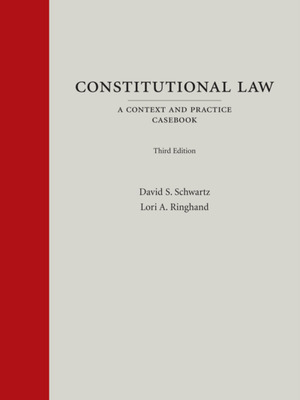
We the Voters: The Constitutional Choices That Shape America's Elections
Lori A. Ringhand
Many Americans today are frustrated, unsettled, or just plain perplexed about the rules governing our democracy and who gets make them. Concern about rigged systems, confusion about the Electoral College, and uncertainty about who's in charge of it all have shaken our faith in elections as a reliable way to peacefully transfer political power in a deeply fractured nation.
In We the Voters, Lori A. Ringhand brings a fresh perspective to these issues. In straightforward and accessible language, she explains how certain questions – who "we the people" are, how they should be represented, and who gets to make the rules governing our elections – have always lurked just beneath the surface of our nation's most contentious fights about how our elections should work.
When there are clear answers to these questions, this book explains them. But its primary purpose is to help readers understand why so many of these questions are genuinely difficult, and how decisions made by past generations both structure and empower our choices today. Using constitutional text, history, and landmark Supreme Court decisions, Ringhand shows how the Constitution often serves less as rigid rule book for our elections and more as a general framework, empowering each generation of Americans to engage for themselves the important questions underlying our electoral system by interrogating what is and isn't working for them.
-

The Future of Press Freedom: Democracy, Law, and the News in Changing Times
RonNell Andersen Jones and Sonja R. West
This groundbreaking volume assembles an unparalleled roster of media experts and First Amendment luminaries to chart the future of press freedom in America's changing media landscape. Current and former deans of top US law schools, a Pulitzer Prize-winning journalist, former Supreme Court clerks, and renowned scholars of law and communications offer their collective wisdom on safeguarding journalism amidst unprecedented challenges. Their contributions provide an incisive analysis of emerging threats to press freedom, from technological and economic disruptions to eroding public trust, while proposing innovative legal and policy solutions. The volume tackles cutting-edge issues like artificial intelligence in news production and the evolving definition of 'the press' in the digital age. Blending rigorous scholarship with practical insights, this essential resource equips journalists, press advocates, policymakers, and engaged citizens with expert knowledge to defend press freedom. This title is also available as Open Access on Cambridge Core.
-

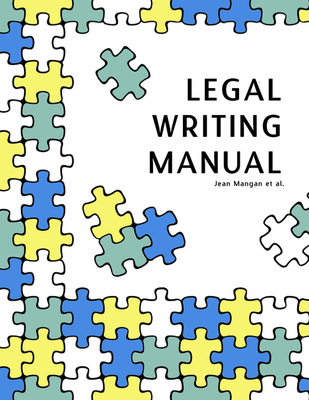
Legal Writing Manual (4th ed.)
Jean Mangan, Dylan Cohen, Frank Easterlin, Brittany Goad, Gabrielle Gravel, Chase Lyndale, George "Max" Miseyko, and Emily Whitest
This manual provides you with an overview of first-year legal writing topics and provides checkpoints during your writing process. On the other hand, this manual does not answer every question you have ever had on any legal writing concept and it is certainly not a spellbook that will make you instantly awesome at legal writing. Writing as a skill is a lifelong development process. Everyone can be an effective legal writer. Put in the time to study the concepts and then to practice using those concepts in your writing. Seek feedback on your writing and implement the feedback you receive. Writing takes practice, and this manual can help guide you through.
-

The Complete Periodical Literature of Law Librarianship
Sarah C. Slinger and Michael J. Slinger
The Complete Periodical Literature of Law Librarianship is the result of decades of meticulous effort, with the editors reading every single article to create a resource unlike any other. Designed to tackle the unique challenges of researching the law librarianship profession, this bibliography, now available as a searchable HeinOnline database, provides detailed guidance to help researchers better understand the subject matter of each article.
Each article features editor-crafted abstracts designed to provide researchers with a clear understanding of its contents. These detailed annotations highlight key themes and topics, offering valuable insight at a glance and helping researchers determine whether an article is relevant to their needs. Developed through a thorough review of the professional literature, these abstracts bridge the gap in traditional indexing tools by offering comprehensive, meaningful guidance for more effective research.
-
Dilemmas in Digital Abuse
Thomas E. Kadri
Digital abuse is on the rise. People are increasingly using networked technologies to engage in harassment, stalking, privacy invasions, and surveillance. The law will often adapt to deal with harmful technologies, but is it adapting quickly enough? Is law even the right tool to confront digital abuse? If it is, which laws work best and who should enforce them?
One of the pressing challenges of our time is deciding whether and how to regulate digital abuse. Through a range of “dilemmas” involving digital abuse, this book will interrogate responses to various harms enabled by networked technologies, exploring issues related to civil rights, consumer protection, cybercrime, free speech, privacy, and private self-governance. In covering these topics, this book confronts issues related to gender, race, class, sexuality, and intersectionality, all of which are crucial to understanding how our society shapes and is shaped by technology.
My goal in publishing these dilemmas is to do my part to make legal education more affordable, accessible, and adaptable. That’s why I’m making the book available to all for free. By using a CC BY-NC license, I’m also inviting others to adapt these materials for their own use, so long as they adhere to the non-commerciality and attribution terms. (Anyone interested in “remixing” this book for their own purposes should feel free to contact me at [email protected], including if you’d like a more adaptable non-PDF version.)
You’re welcome to print any part of this book if you want a hard copy to accompany the digital version. If you do print it, I ask that you please be environmentally conscious by using double-sided pages. Because the digital version can be easily searched, it contains no index or other finding aids that are conventional for printed books. You should also be able to enhance your experience with the digital version by highlighting text, adding comments, and annotating it in any other ways you find helpful.
You may also purchase a hard copy for around $14 here. This paperback version is made and distributed by Lulu, and I make no revenue from any sales.
Given that this book focuses extensively on different forms of abuse and violence, I caution that some of the dilemmas might induce trauma or distress. I worry that providing individualized content warnings before each dilemma would reflect my own perspectives and experiences but exclude what might trigger other people, especially because the legal and social issues surrounding digital abuse challenge us to confront difficult and disturbing issues in ways I can’t always predict in advance. Individualized warnings might also bias a reader’s analysis when responding to the questions following each dilemma. As a result, I offer this general content warning here and encourage readers to be in the right headspace—whatever that might mean to you—when engaging with these dilemmas.
Finally, I welcome any reactions to this book. Please reach out if you think important perspectives are missing or if you find errors or typos. I surely have blind spots in the way I present some topics, plus I lack a professional editor to catch my linguistic blunders. You can contact me at [email protected] with any constructive criticism.
Some of the dilemmas in this book can be addressed without conducting outside research, while others build on materials covered in my Digital Abuse course. If you’d like to see the syllabus designed to accompany these dilemmas, please visit www.thomaskadri.com/digital-abuse.
-
Cybercrime Scenarios
Thomas E. Kadri and Samuel Won
Technological innovation alters the commission, definition, and conception of crime. In some cases, computers, social media, and the internet have made existing criminal activity harder to detect or easier to commit. In other cases, they’ve created new forms of criminal activity that challenge longstanding views about the permissibility and punishment of human behavior. Through a range of cybercrime scenarios, this book will address topics such as digital privacy, free speech, terrorism, cybersecurity, image-based sexual abuse, stalking, harassment, doxing, and identity theft.
Our goal in publishing these scenarios is to do our part to make legal education more affordable, accessible, and adaptable. That’s why we’re making the book available to all for free. By using a CC BY-NC license, we’re also inviting others to adapt these materials for their own use, so long as they adhere to the non-commerciality and attribution terms. (Anyone interested in “remixing” this book for their own purposes should feel free to contact us at [email protected], including if you’d like a more adaptable non-PDF version.)
You’re welcome to print any part of this book if you want a hard copy to accompany the digital version. If you do print it, we ask that you please be environmentally conscious by using double-sided pages. Because the digital version can be easily searched, it contains no index or other finding aids that are conventional for printed books. You should also be able to enhance your experience with the digital version by highlighting text, adding comments, and annotating it in any other ways you find helpful.
You may also purchase a hard copy for around $14 here. This paperback version is made and distributed by Lulu, and I make no revenue from any sales.
Given that this book focuses extensively on different forms of abuse and violence, we caution that some of the scenarios might induce trauma or distress. We worry that providing individualized content warnings before each scenario would reflect our own perspectives and experiences but exclude what might trigger other people, especially because the legal and social issues surrounding cybercrime challenge us to confront difficult and disturbing issues in ways we can’t always predict in advance. Individualized warnings might also bias a reader’s analysis when responding to the questions following each scenario. As a result, we offer this general content warning here and encourage readers to be in the right headspace—whatever that might mean to you—when engaging with these scenarios.
Finally, we welcome any reactions to this book, so please reach out if you think important perspectives are missing or if you find errors or typos. We surely have blind spots in the way we present some topics, plus we lack a professional editor to catch our linguistic blunders. You can contact us at [email protected] with any constructive criticism.
Some of the scenarios in this book can be addressed without conducting outside research, while others build on materials covered in Professor Kadri’s Cybercrime course. If you’d like to see the syllabus designed to accompany these scenarios, please visit www.thomaskadri.com/cybercrime.
-
Criminal Law Drafting Manual
Jean Mangan
This textbook was created under a Round 19 Mini-Grant. It is hosted on the Open ALG (Affordable Learning Georgia) Projects platform. 2024 edition.
-

Quiet Counsel: Looking Back on a Life of Service to the Law
Larry D. Thompson
In this thoughtful and candid memoir, former Deputy U.S. Attorney General Larry D. Thompson explores the big questions of his life and career, from his childhood in Hannibal, Missouri to his time advising the nation’s most powerful figures in government and business leadership.
With a strong belief in the principles of the U.S. Constitution and a desire for cooperation across ideological, social, and racial lines, Thompson rose through the ranks in both government and corporate practice. His career trajectory touches on some of our most pressing issues. As Deputy U.S. Attorney General under President George W. Bush, he guided the administration through complex questions concerning privacy and security. As counsel for PepsiCo, Inc. and the Compliance Monitor for Volkswagen, he weighed in on important debates about corporate responsibility. And as a successful Black man with a moderate approach to politics, he has had to confront issues of diversity and justice in modern America.
Quiet Counsel is a collection of Thompson’s personal and legal philosophies, a series of considered arguments for becoming a safer, fairer, and better nation through the legal system. In an era where the loudest debaters dominate our political and social conversations, Thompson proves that sometimes the quiet voice is the one most worth heeding.
School of Law faculty at the University of Georgia author some of our country's leading legal scholarship. The following is a collection of books published by our past and current faculty members. Several faculty members have also created open educational resources made available through open textbook platforms. View a list of our faculty's open educational resource materials.
Printing is not supported at the primary Gallery Thumbnail page. Please first navigate to a specific Image before printing.